

The Brainologi Blog
Parenting tips, research-backed strategies, and conversations from the Homework Hustle podcast — all in one place.
From the blog.
The first five posts below are part of the "Play Smart" series — 5 must-do's for building life skills through playtime, by Sheetal Kapoor. Below those, episode summaries from the Homework Hustle podcast, newest at the top.

Ration Your Help
By Sheetal Kapoor · 1 min read
Let them make mistakes. Intervene only if you feel that the child is losing interest in the game. Why? The more they succeed, even at the simplest tasks, the more they build self-confidence — our role is to help THEM attain success, not make the TASK a success by finishing it for them.
Read the article →
Show and Tell
By Sheetal Kapoor · 1 min read
Talk to your child while you show them how something is done. Why? Simply because hearing and seeing at the same time helps them understand better.
Read the article →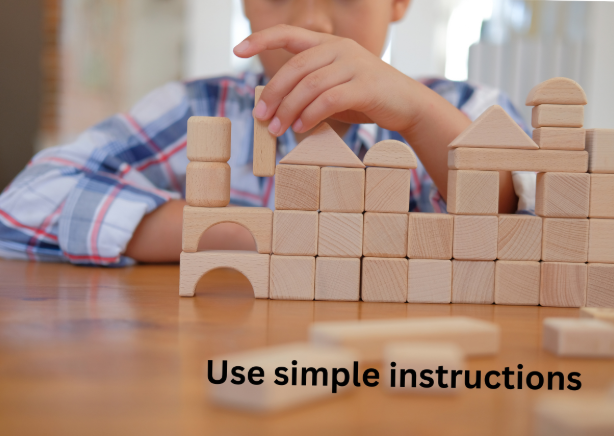
Keep It Easy
By Sheetal Kapoor · 1 min read
Use simple language, but be clear when you describe what the child is seeing. Why? Short, straightforward instructions avoid confusing the child — often a child can't do something not for lack of ability, but because communication is the barrier.
Read the article →
Level Up
By Sheetal Kapoor · 1 min read
Pay attention to how your child is faring in each game. If a level feels too easy they'll lose interest — set them a tougher goal. Why? Too easy and they're bored; too difficult and they lose confidence. Overcoming progressively challenging levels builds a feeling of competence.
Read the article →
Tell Them Why
By Sheetal Kapoor · 1 min read
Praise them with simple, encouraging sentences. Let them know how they are doing and why — ditto when you have to admonish them. Why? "Good boy!" or "Good girl!" doesn't tell your child what you liked about what they did, so they don't know which behaviour to repeat.
Read the article →
How To Say No To Your Child (Without the Battle)
By Shubhada Dayal & Sheetal Kapoor · 2 min read
Most parents assume the word "no" is what kids push back against — but the real friction is almost always in the delivery, not the word itself. In this episode, hosts Shubhada Dayal and Sheetal Kapoor unpack why a boundary that follows genuine acknowledgment lands completely differently than one that's purely reactive.
They share three ways to say no that children actually respect: acknowledge the feeling before the answer ("I can see you really want that"), give the reason once and resist the urge to over-explain when pushback comes, and offer a choice inside the boundary rather than instead of it — "not now, but you can pick after dinner." That last one, they note, isn't permissive; it simply gives the child some agency within a limit that still holds.
The conversation lands on a simple reframe: resistance to "no" is rarely about defiance for its own sake. As Sheetal puts it, "A boundary a child understands is a boundary a child keeps. A boundary they don't understand is just a rule waiting to be tested." The fix isn't saying no less — it's saying it differently.

"Why Can They Do It and I Can't?" — Handling Comparisons and Pushback
By Shubhada Dayal & Sheetal Kapoor · 2 min read
"Why can they do it and I can't?" is a question most parents have heard at some point — and in this episode, Sheetal Kapoor and Shubhada Dayal dig into what's actually being asked when a child compares themselves to a sibling, friend, or classmate.
Their core insight: comparison at this age is rarely about the other child. It's usually a child trying to locate themselves — where do I belong, what am I good at, am I keeping up. The instinct to reassure ("you're great at other things") often skips right past what the child is actually feeling.
In the moment, they suggest naming the feeling first ("that feels frustrating") before offering any comparison at all, separating effort from outcome out loud ("they've been practicing for a year; you started last month"), and resisting the reflex to one-up with a different comparison. As they put it: "They're not asking for a comparison. They're asking for reassurance that they're still on track." Comparisons are usually about belonging, not ability.

Is My Child Really Lazy? (Probably Not.)
By Shubhada Dayal & Sheetal Kapoor · 2 min read
"My child just isn't motivated" is one of the most common messages parents send Shubhada Dayal and Sheetal Kapoor — and in this episode, they make the case that motivation is rarely the actual problem. It's a symptom, not a cause.
When a child seems to have checked out, the hosts suggest it's usually one of three things: the task feels too hard with no visible path forward, the child has been corrected so often they've stopped trying to avoid failing publicly, or the goal was never really theirs to begin with. Before assuming laziness, they recommend asking: Does the child know what "done" actually looks like? Have recent attempts been met mostly with correction rather than acknowledgment? And whose goal is this really — the child's, or ours?
The episode's central idea reframes disengagement entirely: "A child who has stopped trying is usually telling you something about the task, not about their character." Look at task clarity, recent feedback patterns, and genuine ownership — the three levers that actually move the needle.